Introduction
We have learnt what a quadrilateral is and different types of a quadrilateral in the chapter Quadrilateral and Types of Quadrilateral. As the number of sides of a quadrilateral are always fixed i.e. four, so, the types of Quadrilateral are classified based on how the length of four sides vary and how inclined the sides are.
In this chapter, we will learn about the measurements that can be done for a quadrilateral. Perimeter and the area calculations are the mostly used measurements on a quadrilateral.
Perimeter
The perimeter of any plane figure is the total length of its boundary. In other words, we can say perimeter is how long the boundary of a quadrilateral is and is calculated by adding up the length of all sides of a quadrilateral. The perimeter is measured by the same units as of length i.e. millimeter, centimeter, meter, kilometer etc.
Example of perimeter calculation is how long a runner has to run around a rectangular shape playground to finish one round. The runner has to go around the boundary of the rectangle and cover up all the sides. So, the distance covered by him will be equal to the sum of all sides of the rectangle, which is called the perimeter.
Area
The area of any plane figure is the amount of surface enclosed by its sides. Let’s understand it by an example:
Example of area calculation is how much area one has to paint on one side surface of a rectangular shape wooden board. If we need to paint both sides of rectangular board, then it will be two surfaces to paint that will make two areas of board to be painted.
Let’s have a look at how to calculate the area and perimeter of various types of quadrilaterals.
Perimeter of parallelogram
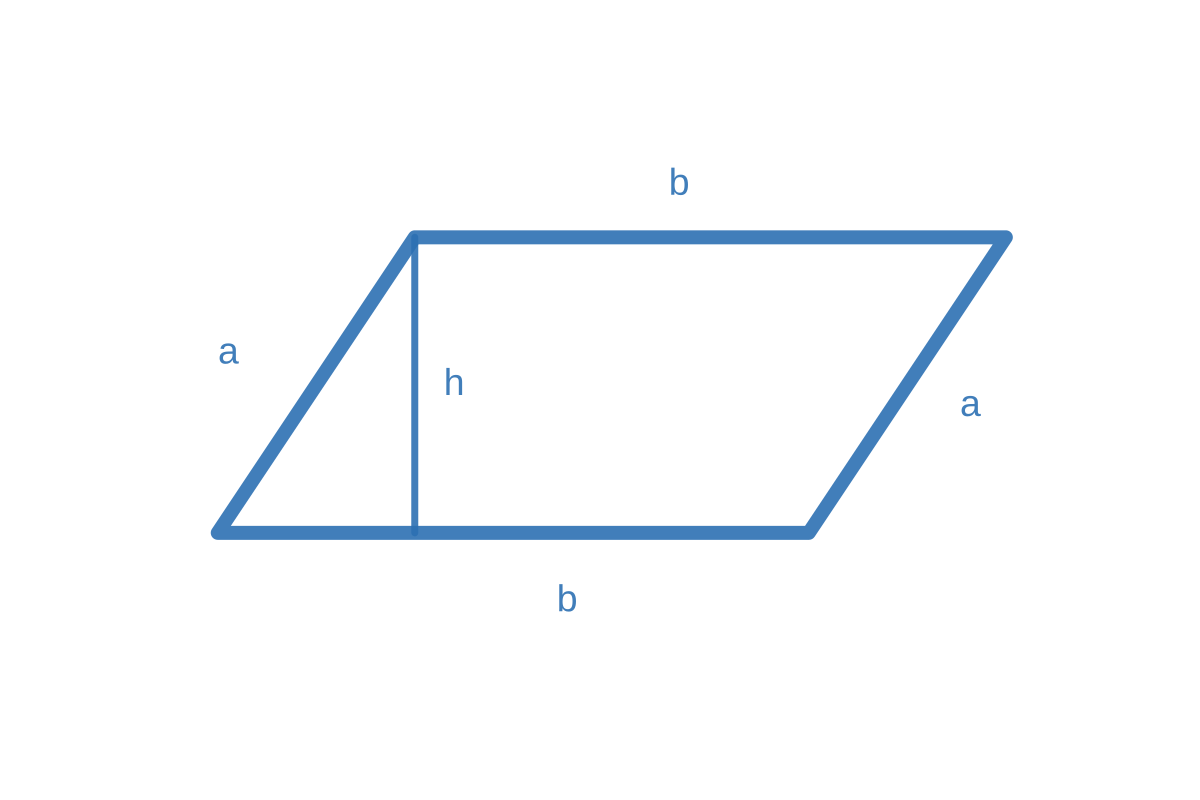
Perimeter of a parallelogram is calculated by adding up the length of all sides.
The parallelogram in above figure has two parallel sides a, b and height h. We can write it as:
Perimeter = a + b + a + b = 2a + 2b = 2(a + b)
Perimeter of parallelogram = 2(a + b)
Area of parallelogram
Area of a parallelogram is calculated by multiplying its length of base and height h.
So, area of parallelogram = base × height = b × h
Area of parallelogram = b × h
Perimeter of rectangle
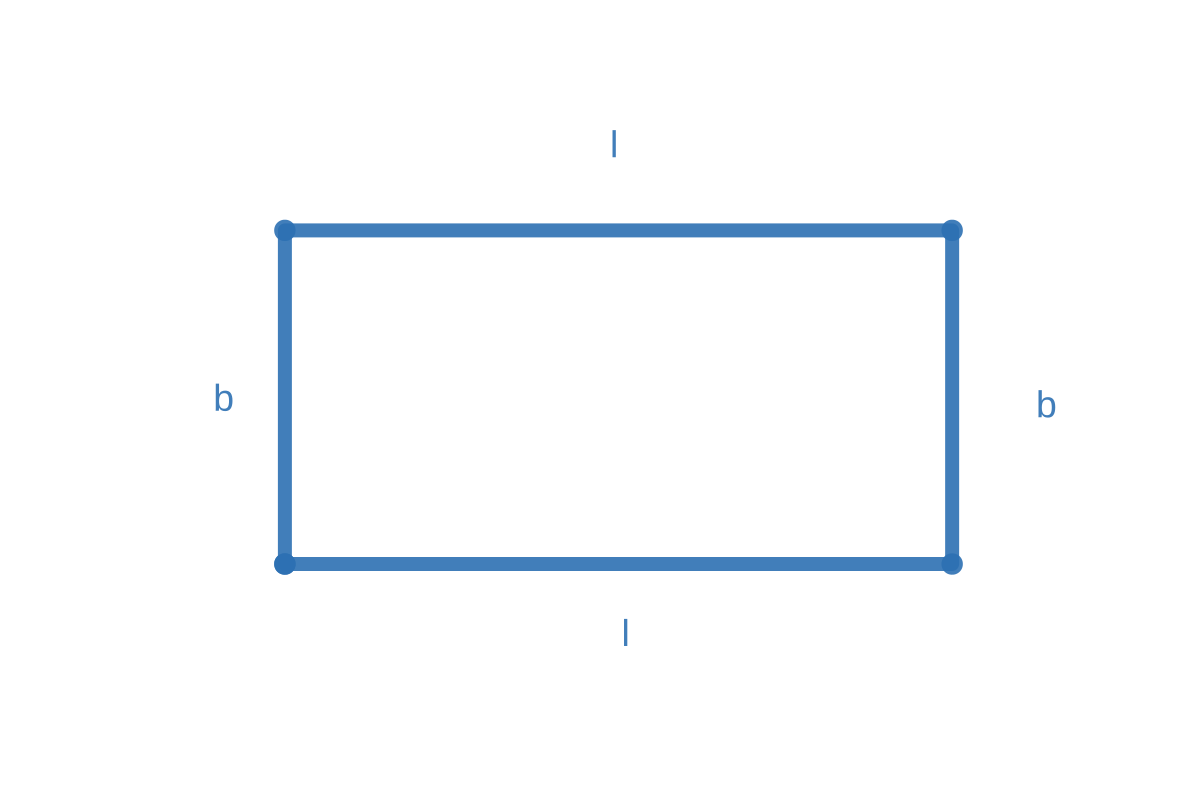
Perimeter of a rectangle is calculated by adding up the length of all sides. The rectangle in above figure has length l and breadth b. Therefore, the perimeter will be the sum of length of its four sides.
We can write it as:
Perimeter = l + b + l + b = 2l + 2b = 2(l + b)
Perimeter of rectangle = 2(l + b)
Area of rectangle
Area of a rectangle is calculated by multiplying its length and breadth. So, area of square
= length × breadth
= l × b
Area of square = l × b
Perimeter of square
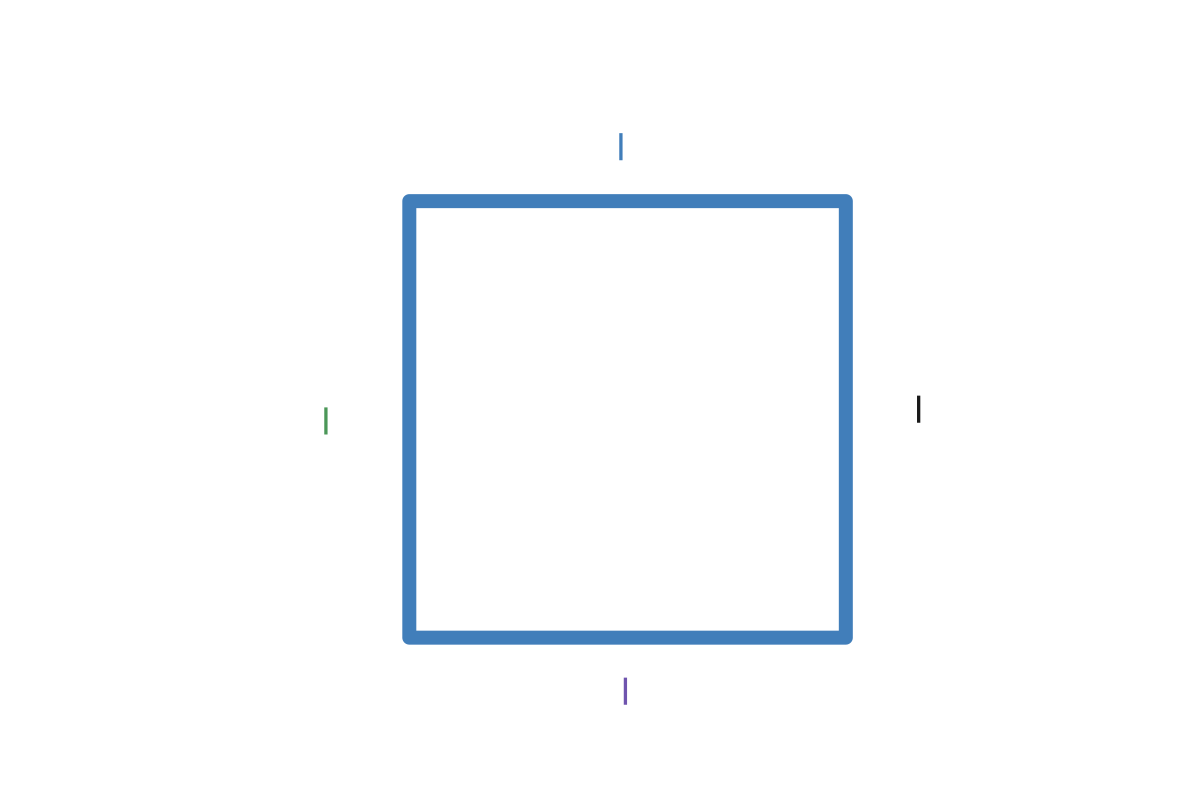
Perimeter of a square is calculated by adding up the length of all sides.
The square in above figure has length l of its four sides. Therefore, the perimeter will be the sum of length of
its four sides. We can write it as:
Perimeter = l + l + l + l = 4l
Perimeter of the square can also be calculated by multiplying 4 with length l of the square. So, perimeter can also be
calculated as:
Perimeter = 4 × l = 4l
Perimeter of square = 4l
Area of square
Area of a square is calculated by multiplying its length and breadth.
So, area of square = length × breadth = l × l = l2
Area of square = l2
Perimeter of rhombus
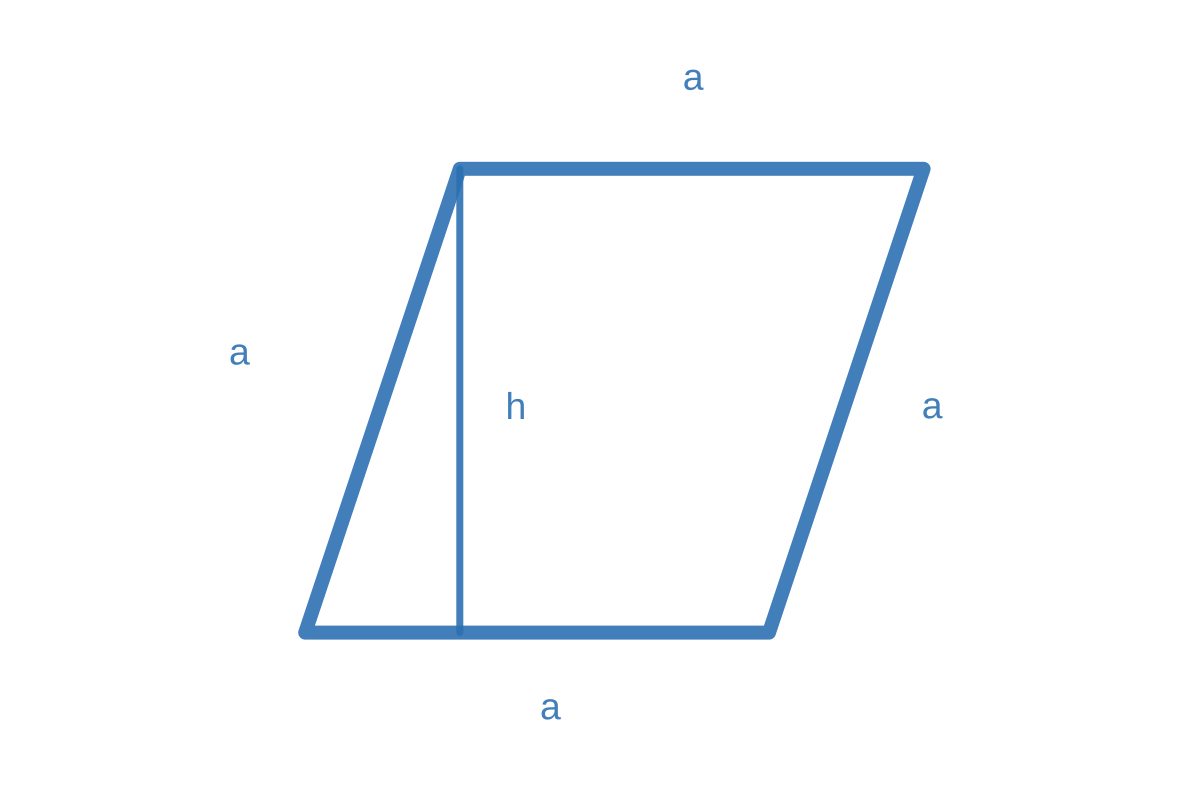
Perimeter of a rhombus is calculated by adding up the length of all sides. The rhombus in above figure has length a
of its all sides because the length of all sides of a rhombus are always equal. Therefore, the perimeter will be the
sum of length of its four sides. We can write it as:
Perimeter = a + a + a + a = 4a
Perimeter of the rhombus can also be calculated by multiplying 4 with length a. So, perimeter can also be calculated
as:
Perimeter = 4 × a = 4a
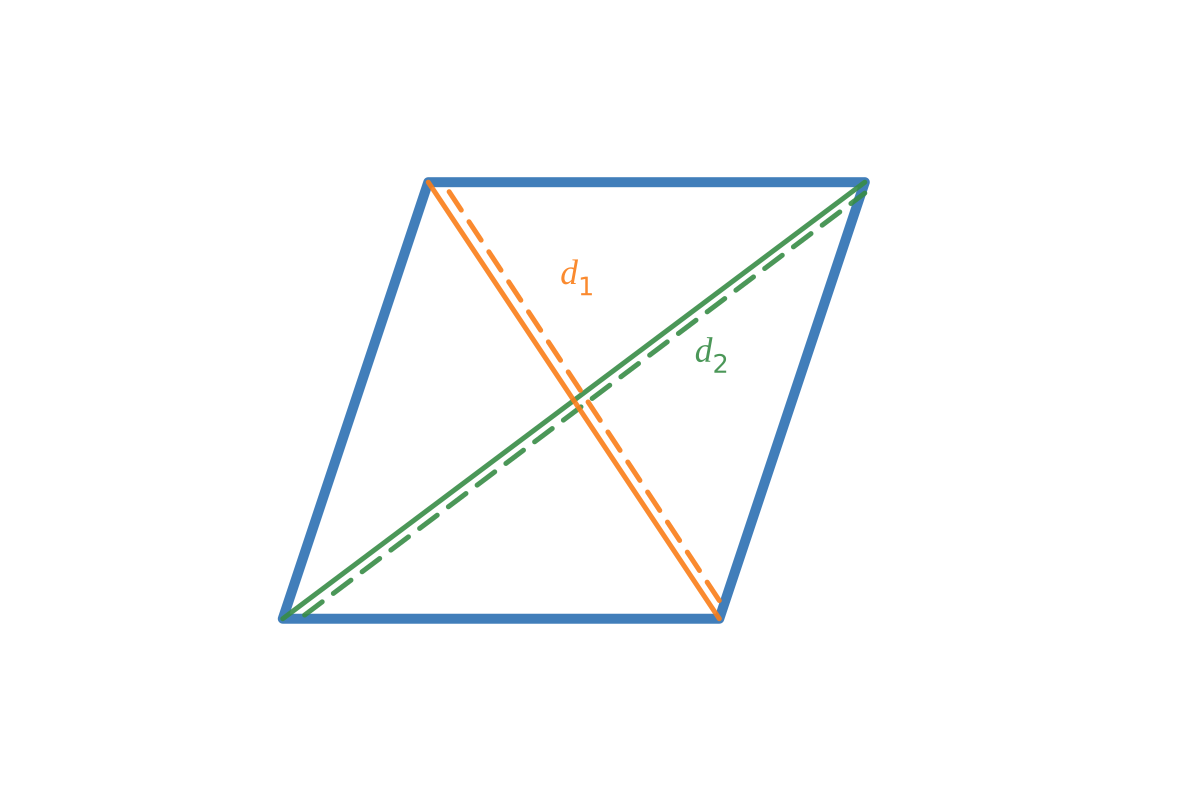
Perimeter of the rhombus is also calculated using the length of two diagonals.
Perimeter
= 2√
d1² +
d2²
Perimeter of rhombus = 4a
Perimeter of rhombus =
2√
d1² +
d2²
Area of rhombus
Area of a rhombus is calculated by multiplying its length of base and height h.
So, area of rhombus = base × height = a × h
Area of the rhombus is also calculated using the length of two diagonals.
Area of rhombus = 1 2 × d1 × d2
Area of rhombus = a × h
Area of rhombus =
1
2
× d1 × d2
Perimeter of trapezium
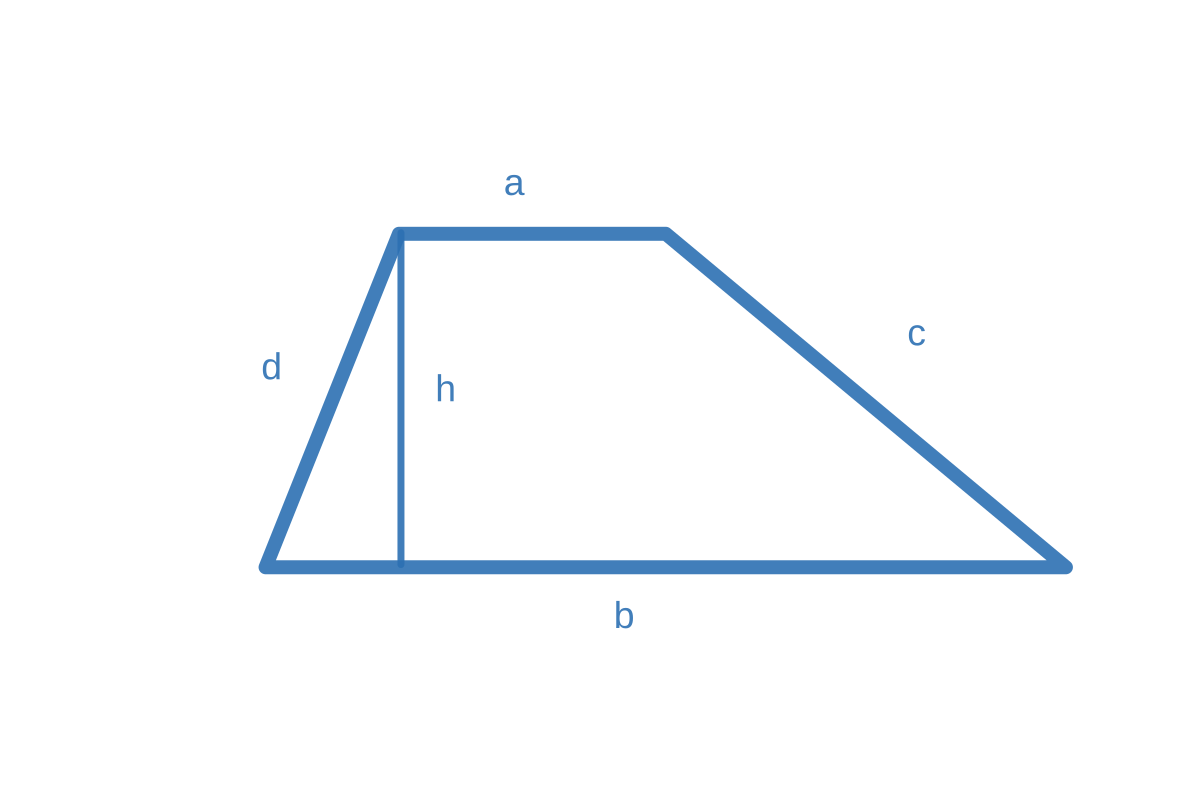
Perimeter of a trapezium is calculated by adding up the length of all sides.
The trapezium in the above figure has sides a, b, c, d and height h. We can write it as:
Perimeter = a + b + c + d
Perimeter of trapezium = a + b + c + d
Area of trapezium
Area of trapezium =
1
2
(sum of parallel sides) × h
=
1
2
(a + b) × height
Area of trapezium = 1 2 (a + b) × height
Solved Examples
1) Find the perimeter of square whose length of side each side is 10 cm.
Solution
Length of side of square = 10 cm
Perimeter of square = 4 × side
= 4 × 10
= 40 cm
2) Find length of side of a square whose perimeter 80 cm.
Solution
Perimeter of square = 80 cm
Perimeter of square = 4 × side
80 = 4 × side
80
4
= side
20 = side
∴ length of side = 20 cm
3) Find perimeter of a rectangle whose length is 10 m and breadth is 15 m.
Solution
Length of rectangle = 10 m
Breadth of rectangle = 15 m
Perimeter of rectangle = 2(l + b)
= 2(10 + 15)
= 2(25)
= 50
∴ Perimeter = 50 m
4) Find length of a rectangular park if its perimeter is 100 m and breadth is 30 m.
Solution
Perimeter of rectangular park = 100 m
Breadth = 30 m
Let length of rectangular park = l
Perimeter of rectangle = 2(l + b)
100 = 2(l + 30)
100
2
= l + 30
50 = l + 30
50 - 30 = l
20 = l
∴ length of rectangular park = 20 m
5) Find the cost of fencing a square shaped park which has length of each of its sides as 25 m. The cost of fencing is $10 per metre.
Solution
Length of each side of park = 25 m
Perimeter of square = 4 × side
∴ Perimeter of park = 4 × 25
= 100 m
Cost of fencing per meter = $10
∴ Cost of fencing of 100 m = 10 × 100
= $1000
6) A boy and a girl go for jogging in a ground. The boy jogs around a rectangular shaped ground whose length and breadth are 50 m and 70 m respectively. The girl jogs around a square shaped ground whose length of each side is 50 m. Find out who covered the more distance among the boy and girl.
Solution
Distance covered by the girl
Length of each side of ground = 50 m
Perimeter of square = 4 × side
∴ Perimeter of square shaped ground = 4 × 50
= 200 m
Distance covered by the boy
Length of ground = 50 m
Breadth of ground = 70 m
Perimeter of rectangle = 2(l + b)
∴ Perimeter of rectangular ground = 2(50 + 70)
= 2(120)
= 240 m
The boy covered 240 m and the girl covered 200 m. So, the boy covered more than the girl by 240 - 200 =
40 m.
7) Find area of a square whose length of each side is 8 cm.
Solution
Side of square = 8 cm
Area of square = side × side
= 8 × 8
= 64 cm²
8) Find area of a rectangle whose length is 40 cm and breadth is 20 cm.
Solution
Length of rectangle = 40 cm
Breadth of rectangle = 20 cm
Area of rectangle = l × b
= 40 × 20
= 800 cm²
9) The area of a rectangle 200 cm². Find the breadth of rectangle if its length is 10 cm.
Solution
Length of rectangle = 10 cm
Area of rectangle = 200 cm²
Also, Area of rectangle = l × b
200 = 10 × b
200
10
= b
20 = b
∴ breadth of rectangle = 20 cm
10) The length and breadth of a room are 10 m and 20 m respectively. Find the cost of flooring a room at the rate of $10 per square meter.
Solution
Length of room = 10 m
Breadth of room = 20 m
Area of rectangular room = l × b
= 10 × 20
= 200 m²
Cost of flooring per m² = $10
∴ Cost of flooring of 200 m² = 10 × 200
= $2000
Fill in Blanks Worksheet
| Type: | Blanks |
| Count: | 1 |
- Area of rectangle = ___________ × breadth.
- Area of rhombus = 1 2 × d1 × ___________.
- Perimeter of square = ___________ × side.
- Perimeter of rectangle = ___________ (l + b).
- Perimeter of rhombus = 4 × ___________.
- Area of parallelogram = ___________ × height.
- Area of trapezium = 1 2 (sum of parallel sides) × ___________.
- Area of square of side 12 cm is ___________cm².
- Area of the rectangle of 10 cm × 12 cm is ___________cm².
- Perimeter of the rhombus of each side 4 cm is ___________ cm.


Word Problems Worksheets
| Type: | Word Problems |
| Count: | 2 |

Questions on calculation of perimeter of quadrilaterals.
- Find the perimeter of a square whose side is 10 cm.
- Find the perimeter of a rectangle whose length is 20 cm and breadth is 12 cm.
- What will be the breadth of a rectangle whose length is 25 cm and perimeter is 90 cm.
- What will be the length of the side of the square whose perimeter is 80 cm.
- An athlete runs 3 rounds of a squared shape path whose side is 15 cm. Find the total distance covered by him.

Questions on calculation of area of quadrilaterals.
- The length of the rectangle is 15 cm and breadth i s 14 cm, find the area of the rectangle.
- Find the area of a square whose side is 24 cm.
- How many times does the new area become of the original area of a square if the length of the side of the square is doubled?
- The floor of a rectangular room is 60 cm × 50 cm. The floor will be fitted with tiles of size 15 cm × 10 cm. Calculate the total number of tiles required to fit into the room.
- Area of a square is 576 cm². Calculate length of side and perimeter of the square.
Multiple Choice Questions Worksheet
| Type: | MCQ |
| Count: | 1 |
- 40 m
- 80 m
- 120 m
- 160 m
- 22 cm
- 55 cm
- 33 cm
- 44 cm
- $400
- $300
- $200
- $100
- $200
- $220
- $240
- $260
- 20 cm
- 22 cm
- 24 cm
- 26 cm
- remains same
- be 2 times area of the old rectangle
- be 4 times area of the old rectangle
- be 8 times area of the old rectangle
- 10
- 15
- 30
- 20
- 30 cm and 40 cm
- 40 cm and 30 cm
- 36 cm and 48 cm
- 48 cm and 36 cm
- be 6 times area of the old square
- be 2 times area of the old square
- be 4 times area of the old square
- remain same
- 6 times area of the old rectangle
- 4 times area of the old rectangle
- 2 times area of the old rectangle
- remain same